All persons
Vladas Mironas
1880–1953
- Nationality
- Lithuania
- Occupation
- priest
Vladas Mironas (; 22 June 1880 â 18 February 1953) was a Lithuanian Catholic priest and politician.
Incarceration history
Facilities
- Kaunas PrisonDates unknown
- Vladimir Central PrisonDates unknown
Biography
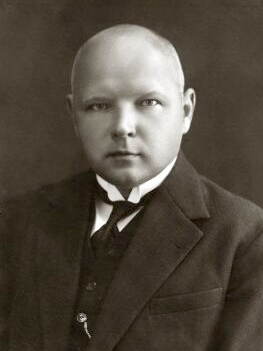
Vladas Mironas (; 22 June 1880 â 18 February 1953) was a Lithuanian Catholic priest and politician. He was one of the twenty signatories of the Act of Independence of Lithuania and served as the Prime Minister of Lithuania from March 1938 to March 1939. Mironas attended Mitau Gymnasium where his classmate was Antanas Smetona. They became friends and Mironas spent most of his life supporting Smetona's political ambitions. After graduating from the Saint Petersburg Roman Catholic Theological Academy, Mironas was ordained priest in 1904 and joined the Lithuanian cultural life in Vilnius. He was a member and co-founder of numerous Lithuanian societies and organizations, including the Lithuanian Education Society Rytas. He attended the Great Vilnius Seimas in 1905. He was a parish priest of Choroszcz (1907â1910), Valkininkai (1910â1914), and Daugai (from 1914). In 1917, he attended Vilnius Conference and was elected to the Council of Lithuania as its second vice-chairman. On 16 February 1918, he signed the Act of Independence of Lithuania. In late 1918, Mironas joined the Party of National Progress which merged into the Lithuanian Nationalist Union and was continuously elected to its leadership. He was elected to the Third Seimas in May 1926. The coup d'état in December 1926 brought the Nationalist Union to power and Smetona became the President of Lithuania. In 1929, Mironas became the chief chaplain of the Lithuanian Army helping ensure its loyalty to Smetona. He had substantial influence in the new regime and handled some sensitive tasks, including attempting to mediate the conflict between Smetona and Augustinas Voldemaras. His contemporary diplomat Petras Klimas referred to Mironas as the éminence grise (grey eminence) of Smetona. Mironas became the successor of Juozas TÅ«belis (Smetona's brother-in-law) as the Prime Minister of Lithuania after the Polish ultimatum in March 1938 and as the chairman of the Lithuanian Nationalists Union in January 1939. Mironas considered the duties of Prime Minister to be a "heavy and unbearable burden" and his government did not introduce any significant reforms. He was replaced by Jonas Äernius after the German ultimatum and the loss of the KlaipÄda Region in March 1939. Mironas then retired from politics. After the Soviet occupation of Lithuania in June 1940, Mironas was arrested by the NKVD in September 1940 but was freed from Kaunas Prison at the start of the German invasion of the Soviet Union in June 1941. He was arrested again by the Soviets in August 1944 and agreed to became an informant. However, he was reluctant to cooperate and withheld information. He was arrested in January 1947 and sentenced to seven years in prison. He died at the Vladimir Central Prison in 1953.
Related people
Same nationality and era where possible; falls back to shared nationality or era.
 Antanas Merkys1887–1955Lithuania
Antanas Merkys (; 1 February 1887 â 5 March 1955) was the last Prime Minister of independent Lithuania, serving from November 1939 to June 1940.
- Stefan Plater-Zyberk1891–1942Lithuania
 Vladas Jurgutis1885–1966Lithuania
Vladas Jurgutis (17 November 1885 in Joskaudai near Palanga â 9 January 1966 in Vilnius) was a Lithuanian priest, economist, and professor.
 Stasys Å ilingas1885–1962Lithuania
Baron Stasys Å ilingas (11 November 1885 â 13 November 1962) was a prominent lawyer and statesman in interwar Lithuania. When the independence of Lithuania was proclaimed on February 16, 1918, Å ilingas served first as vice-president and then in 1919, as president of the Council of Lithuania.
.jpg) Aleksandras Stulginskis1885–1969Lithuania
Aleksandras Stulginskis1885–1969LithuaniaAleksandras Stulginskis [ÉlʲÉkËsÉÌËndrÉs stÊlʲËɡʲɪÌnʲsʲkʲɪs] (26 February 1885 â 22 September 1969) was the second President of Lithuania (1920â1926).
 Vaclovas Sidzikauskas1893–1973Lithuania
Vaclovas Sidzikauskas (10 April 1893 â 2 December 1973) was a prominent diplomat in interwar Lithuania and post-war anti-communist. Educated at the University of Fribourg and Moscow Imperial University, Sidzikauskas joined the newly established Lithuanian Ministry of Justice.