All persons.jpg)
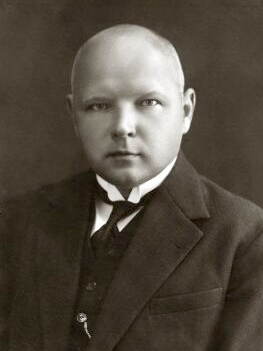
Aleksandras Stulginskis
1885–1969
- Nationality
- Lithuania
- Occupation
- diplomat
Aleksandras Stulginskis [ÉlʲÉkËsÉÌËndrÉs stÊlʲËɡʲɪÌnʲsʲkʲɪs] (26 February 1885 â 22 September 1969) was the second President of Lithuania (1920â1926).
Incarceration history
Facilities
- Vladimir Central PrisonDates unknown
Biography
Aleksandras Stulginskis [ÉlʲÉkËsÉÌËndrÉs stÊlʲËɡʲɪÌnʲsʲkʲɪs] (26 February 1885 â 22 September 1969) was the second President of Lithuania (1920â1926). Stulginskis was also acting President of Lithuania for a few hours later in 1926, following a military coup that was led by his predecessor, President Antanas Smetona, and which had brought down Stulginskis's successor, Kazys Grinius. The coup returned Smetona to office after Stulginskis's brief formal assumption of the Presidency. He began his theological studies in Kaunas and continued in Innsbruck, Austria. However, he decided not to become a priest and moved to the Institute of Agricultural Sciences in University of Halle. He graduated in 1913 and returned to Lithuania. There, he started to work as a farmer. He published many articles on agronomy in Lithuanian press. In 1918, he started to publish journals Ūkininkas ("Farmer") and Ūkininko kalendorius ("Farmer's Calendar"). During World War I, he moved to Vilnius. He was one of the founders of the Lithuanian Christian Democratic Party and the head of its Central Committee in 1917. He signed the memorandum for the president Woodrow Wilson, addressing the question of the recognition of the Lithuanian statehood by the United States. Contrary to Smetona's views, Stulginskis was oriented towards the Entente. He was one of the co-organizers of the Vilnius Conference. After, he was elected to the Council of Lithuania. On 16 February 1918, he signed the Act of Independence of Lithuania. He was an advocate of the democratic republic as the form of the Lithuanian state. Thus, he strongly opposed the idea of monarchy (actually, Mindaugas II was the King of Lithuania from 11 July to 2 November 1918). In independent Lithuania, Stulginskis was in charge of organizing the national army to defend the country against the aggressions of Bolsheviks and Poles. He served as a minister many times. Between May 1920 and 1922, he was Speaker of the Constituent Assembly of Lithuania and thus acting president of the republic. From 1922 to 1926, he was the second President of Lithuania. Stulginskis was Speaker of the Seimas from 1926 to 1927. He withdrew from politics in 1927, and worked on his farm. In 1941, Stulginskis and his wife were arrested by the Soviet NKVD and deported to a gulag in the Krasnoyarsk region, while his wife was deported to the Komi area. After World War II, in 1952, he was officially sentenced by the Soviet authorities to 25 years in prison for his anti-socialist and clerical policies in pre-war Lithuania. Released after Joseph Stalin's death in 1956, he was allowed to emigrate, yet he refused and returned to the Lithuanian SSR. Stulginskis settled in Kaunas, where he died on 22 September 1969, aged 84, the last of the Signatories of the Act of Independence of Lithuania.
Related people
Same nationality and era where possible; falls back to shared nationality or era.
 Antanas Merkys1887–1955Lithuania
Antanas Merkys (; 1 February 1887 â 5 March 1955) was the last Prime Minister of independent Lithuania, serving from November 1939 to June 1940.
- Vladas Niunka1907–1983Lithuania
Vladas Niunka (17 August 1907 â 26 December 1983) was a Lithuanian communist politician and publicist.
- Stefan Plater-Zyberk1891–1942Lithuania
 Vladas Jurgutis1885–1966Lithuania
Vladas Jurgutis (17 November 1885 in Joskaudai near Palanga â 9 January 1966 in Vilnius) was a Lithuanian priest, economist, and professor.
 Stasys Å ilingas1885–1962Lithuania
Baron Stasys Å ilingas (11 November 1885 â 13 November 1962) was a prominent lawyer and statesman in interwar Lithuania. When the independence of Lithuania was proclaimed on February 16, 1918, Å ilingas served first as vice-president and then in 1919, as president of the Council of Lithuania.
 Vaclovas Sidzikauskas1893–1973Lithuania
Vaclovas Sidzikauskas (10 April 1893 â 2 December 1973) was a prominent diplomat in interwar Lithuania and post-war anti-communist. Educated at the University of Fribourg and Moscow Imperial University, Sidzikauskas joined the newly established Lithuanian Ministry of Justice.