All persons_(14803275713).jpg)
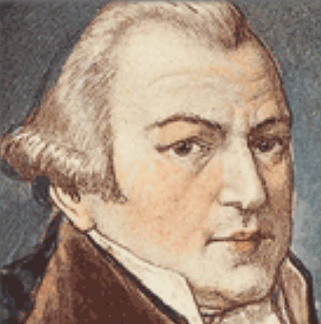
Thomas Bambridge
1741
- Nationality
- Kingdom of Great Britain
- Occupation
- lawyer
Thomas Bambridge (died 1741) was a British attorney who became a notorious warden of the Fleet Prison in London. Bambridge became warden of the Fleet in 1728.
Incarceration history
Facilities
- Newgate PrisonDates unknown
- Fleet PrisonDates unknown
- Newgate PrisonDates unknown
Biography
Thomas Bambridge (died 1741) was a British attorney who became a notorious warden of the Fleet Prison in London. Bambridge became warden of the Fleet in 1728. He had paid, with another person, £5,000 to John Huggins for the wardenship. He was found guilty of extortion, and, according to a committee of the House of Commons appointed to inquire into the state of English gaols, arbitrarily and unlawfully loaded with irons, put into dungeons, and destroyed prisoners for debt, treating them in the most barbarous and cruel manner, in violation of the law. He was committed to Newgate Prison, and an act, Warden of Fleet Prison Act 1728 (2 Geo. 2. c. 32) was passed to prevent his enjoying the office of warden.
Related people
Same nationality and era where possible; falls back to shared nationality or era.
- Charles Hall1740–1825Kingdom of Great Britain
Charles Hall (1740â1825) was a British physician, social critic and Ricardian socialist who published The Effects of Civilization on the People in European States in 1805, condemning capitalism for its inability to provide for the poor.
 Lord George Gordon1752–1793Kingdom of Great Britain
Lord George Gordon (26 December 1751 â 1 November 1793) was a British nobleman and politician best known for lending his name to the Gordon Riots of 1780.
 George Morland1763–1804Kingdom of Great Britain
George Morland (26 June 1763 â 29 October 1804) was an English painter.
 Jonathan Wild1683–1725Kingdom of Great Britain
Jonathan Wild, also spelled Wilde (1682 or 1683 â 24 May 1725), was an English thief-taker and a major figure in London's criminal underworld, notable for operating on both sides of the law, posing as a public-spirited vigilante entitled the "Thief-Taker General".
.jpg) Robert Lloyd1733–1764Kingdom of Great Britain
Robert Lloyd1733–1764Kingdom of Great BritainRobert Lloyd (1733â1764) was an English poet and satirist. Lloyd was educated at Westminster School and Trinity College, Cambridge, graduating B.A.
 John Cleland1709–1789Kingdom of Great Britain
John Cleland (24 September 1709 â 23 January 1789) was an English novelist best known for his fictional Fanny Hill: or, the Memoirs of a Woman of Pleasure, whose eroticism led to his arrest.