All prisons
All in France →
France · Le Vernet
Le Vernet d'Ariège concentration camp
Concentration campClosed 1944High
Verified
Aging · 3mo ago
Sources last reviewed on
Data is aggregated from public sources and may be incomplete or out of date. Always verify with primary sources before acting on any figure. See data sources.
For families
How to send mail, money, and visit Le Vernet d'Ariège concentration camp
Step-by-step guidance using the France system — addresses, money services, visit booking, what to bring on your first visit.
Gallery
From Wikimedia Commons (CC-BY-SA where not otherwise stated).
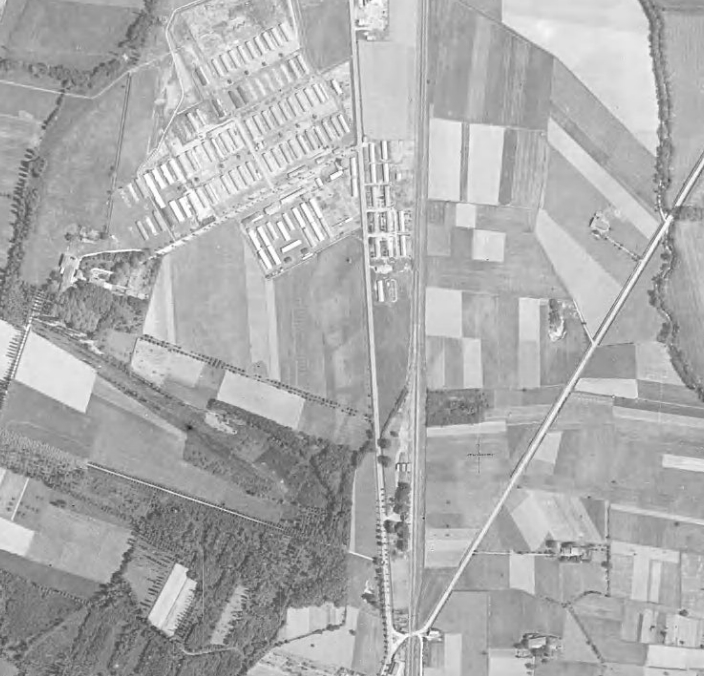
Photo by geoportail via Wikimedia Commons (CC BY-SA 4.0)
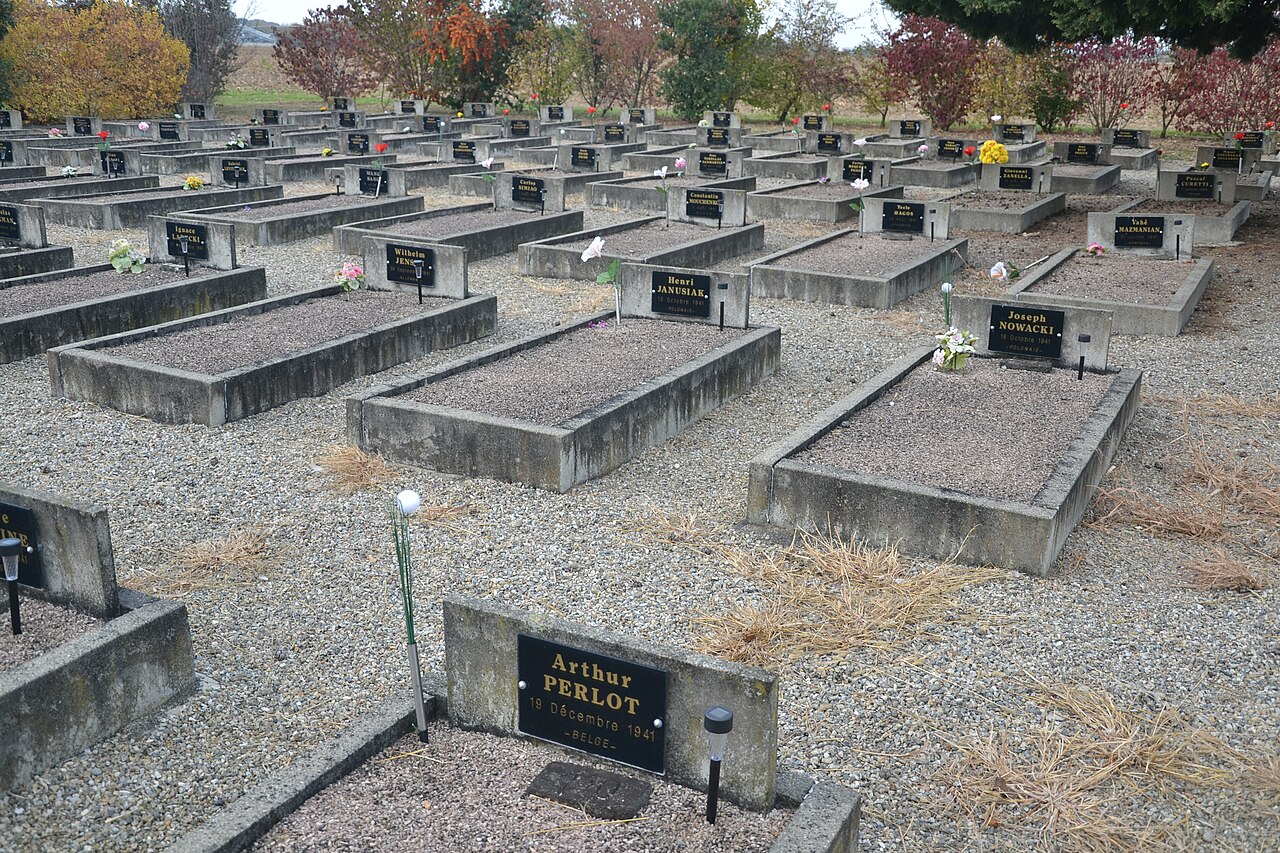
Photo by LucasD via Wikimedia Commons (CC BY-SA 4.0)

Photo by LucasD via Wikimedia Commons (CC BY-SA 4.0)

Photo by LucasD via Wikimedia Commons (CC BY-SA 4.0)

Photo by LucasD via Wikimedia Commons (CC BY-SA 4.0)

Photo by LucasD via Wikimedia Commons (CC BY-SA 4.0)

Photo by Yeza via Wikimedia Commons (CC BY-SA 3.0)

Photo by Yeza via Wikimedia Commons (CC BY-SA 3.0)
Operational period: 1918–1944.
Background
Le Vernet Internment Camp, or Camp du Vernet, was a concentration camp in Le Vernet, Ariège, near Pamiers, in the French Pyrenees. It was built in 1918 as a barracks, but after World War I it was used as an internment camp for prisoners of war. From February 1939 to June 1944, it was used: first as an internment camp (concentration camp), first for Republican refugees (soldiers, their families, opponents of the Franco regime) fleeing Spain after Franco's victory in the Spanish Civil War: in particular some 12,000 refugees, including soldiers of the Durruti Column and others of the International Brigades; then, as of MayâJune 1940, under the Vichy government during German occupation in the Second World War. Starting in 1940, apart from the prisoners coming from the Spanish Civil War, the Vichy government used it to house prisoners considered suspect or dangerous to the government, including members of the resistance and opponents of the Hitler, Mussolini and Pétain regimes; then, from 1942 until June 1944, it was used as a holding camp for Jewish families awaiting deportation to other camps. The last transport out of the camp in June 1944 took the prisoners to Dachau concentration camp.
Source: Wikipedia article lead, CC-BY-SA.
Capacity
—
Current population
—
Occupancy
—
Year opened
1918
Closed 1944
Figures from official sources · verified 16 Jun 2026 · methodology
Facility profile
Operator
—
Population held
Mixed/unknown
Opened
1918
Region
Le Vernet
Security level
—
Death-row facility
No
Conditions
No conditions summary available yet.
Visiting
No visiting information available.
Mailing
No mailing information available.
Practical info
Contact the operator's website for inmate-specific procedures.
Known issues
No major issues documented in our database.
Notable inmates
 Nicolas Lazarévitch1895–1975 · political activist
Nicolas Lazarévitch (17 August 1895 â 24 December 1975) was a Belgian-born French electrician, a building worker, a proof-reader and, most consistently, a libertarian-anarchist writer and activist.
.jpg) Arthur Koestler1905–1983 · writer
Arthur Koestler1905–1983 · writerArthur Koestler (UK: , US: ; German: [ËaÊtuËÉ̯ ËkÅstlÉ]; Hungarian: Kösztler Artúr [ËkøstlÉr ËÉrtuËr]; 5 September 1905 â 1 March 1983) was an Austro-Hungarian-born author and journalist.
- Leo Kneler1902–1979 · French resistance fighter
- Joseph Uchsera1907–1944
- Adriaan Martens1885–1968 · physician
 Max Aub1903–1972 · writer
Max Aub Mohrenwitz (June 2, 1903, Paris â July 22, 1972 Mexico City) was a Mexican-Spanish experimentalist novelist, playwright, poet, and literary critic.
Source: Wikidata + Wikipedia.
Contact & address
Conditions Risk Score
Derived signal — not a judgement. How it's calculated
—
Insufficient data
We don't have enough public data on this facility to score it. Have something to add? Send us a correction.
Related facilities
Same country, matched on type + security level where possible.
- Montech concentration campConcentration camp
- Château du Roc concentration campConcentration camp
- Prémol concentration campConcentration camp
- Chabanet concentration campConcentration camp
- Oberehnheim concentration campConcentration camp
- Château de Bégué concentration campConcentration camp
Data completeness
28%How many of our profile fields are populated. We surface this so families and researchers know the limits.
Sources
- EHRI Authority Record
- Wikidata entity
- Wikipedia — Wikimedia Foundation
- Wikidata — Wikimedia Foundation
- EHRI Authority List of Camps and Ghettos / USHMM Encyclopedia of Camps and Ghettos — European Holocaust Research Infrastructure (EHRI) / United States Holocaust Memorial Museum (USHMM)
- Wikidata (Q973585)
- Wikipedia
- Wikimedia Commons
- See /data-sources for our overall methodology.
Cite this page
Under CC-BY-4.0. Include the URL and access date; the site is a living reference and entries can change.
APA
World Prisons. (2026). Le Vernet d'Ariège concentration camp. Retrieved September 19, 2026, from https://worldprisons.com/prisons/le-vernet-d-ariege-concentration-camp
Chicago
"Le Vernet d'Ariège concentration camp." World Prisons. Accessed September 19, 2026. https://worldprisons.com/prisons/le-vernet-d-ariege-concentration-camp.
BibTeX
@misc{worldprisons-le-vernet-d-ariege-concentr,
  author = {{World Prisons}},
  title = {Le Vernet d'Ariège concentration camp},
  year = {2026},
  url = {https://worldprisons.com/prisons/le-vernet-d-ariege-concentration-camp},
  urldate = {2026-09-19}
}