All persons_-_LABW_-_Generallandesarchiv_Karlsruhe_57-3_Nr._10444.jpg)
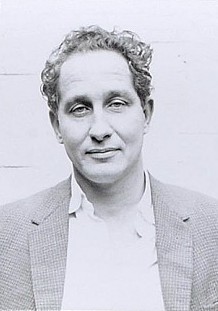
Michael Tippett
1905–1998
- Nationality
- United Kingdom
- Occupation
- conductor
Sir Michael Kemp Tippett (2 January 1905 â 8 January 1998) was an English composer who rose to prominence during and immediately after the Second World War.
Incarceration history
Facilities
- HMP Wormwood ScrubsDates unknown
Biography
Sir Michael Kemp Tippett (2 January 1905 â 8 January 1998) was an English composer who rose to prominence during and immediately after the Second World War. In his lifetime he was sometimes ranked with his contemporary Benjamin Britten as one of the leading British composers of the 20th century. Among his best-known works are the oratorio A Child of Our Time, the orchestral Fantasia Concertante on a Theme of Corelli, and the opera The Midsummer Marriage. Tippett's talent developed slowly. He withdrew or destroyed his earliest compositions, and was 30 before any of his works were published. Until the mid-to-late 1950s his music was broadly lyrical in character, before changing to a more astringent and experimental style. New influencesâincluding those of jazz and blues after his first visit to America in 1965âbecame increasingly evident in his compositions. While Tippett's stature with the public continued to grow, not all critics approved of these changes in style, some believing that the quality of his work suffered as a consequence. From around 1976 his late works began to reflect the works of his youth through a return to lyricism. Although he was much honoured in his lifetime, critical judgement on Tippett's legacy has been uneven, the greatest praise generally reserved for his earlier works. His centenary in 2005 was a muted affair; apart from the few best-known works, his music has not been performed frequently in the 21st century. Having briefly embraced communism in the 1930s, Tippett avoided identifying with any political party. A pacifist after 1940, he was imprisoned in 1943 for refusing to carry out war-related duties required by his military exemption. His initial difficulties in accepting his homosexuality led him in 1939 to Jungian psychoanalysis; the Jungian dichotomy of "shadow" and "light" remained a recurring factor in his music. He was a strong advocate of music education, and was active for much of his life as a radio broadcaster and writer on music.
Related people
Same nationality and era where possible; falls back to shared nationality or era.
- Benjamin Dale1885–1943United Kingdom
Benjamin James Dale (17 July 1885 â 30 July 1943) was an English composer and academic who had a long association with the Royal Academy of Music.
 Ronnie Biggs1929–2013United Kingdom
Ronald Arthur Biggs (8 August 1929 â 18 December 2013) was a British criminal who helped plan and carry out the Great Train Robbery of 1963.
- Maurice Southgate1913–1990United Kingdom
Maurice Southgate (20 June 1913 â 17 March 1990), code named Hector, was an officer in the Royal Air Force and an agent of the United Kingdom's clandestine Special Operations Executive (SOE) organization during World War II.
 Tony Rolt1918–2008United Kingdom
Major Anthony Peter Roylance Rolt, MC & Bar, (16 October 1918 â 6 February 2008) was a British racing driver, soldier and engineer.
 Lilian Rolfe1914–1945United Kingdom
Lilian Vera Rolfe (26 April 1914 â 5 February 1945), code name Nadine, was an agent of the United Kingdom's clandestine Special Operations Executive (SOE) organisation in France during World War II.
- Frankie Fraser1923–2014United Kingdom
Francis Davidson Fraser (13 December 1923 â 26 November 2014), better known as "Mad" Frankie Fraser, was an English gangster who spent 42 years in prison for numerous violent offences.