All persons.jpg)
James Larkin
1876–1947
- Nationality
- Ireland
- Occupation
- politician
James Larkin (28 January 1874 â 30 January 1947), sometimes known as Jim Larkin or Big Jim, was an Irish republican, socialist and trade union leader.
Incarceration history
Facilities
- Sing Sing Correctional FacilityDates unknown
Biography
James Larkin (28 January 1874 â 30 January 1947), sometimes known as Jim Larkin or Big Jim, was an Irish republican, socialist and trade union leader. He was one of the founders of the Irish Labour Party along with James Connolly and William O'Brien, and later the founder of the Irish Worker League (a communist party which was recognised by the Comintern as the Irish section of the world communist movement), as well as the Irish Transport and General Workers' Union (ITGWU) and the Workers' Union of Ireland (the two unions later merged to become SIPTU, Ireland's largest trade union). Along with Connolly and Jack White, he was also a founder of the Irish Citizen Army (ICA; a paramilitary group which was integral to both the Dublin lock-out and the Easter Rising). Larkin was a leading figure in the Syndicalist movement. Larkin was born to Irish parents in Toxteth, Liverpool, England. Growing up in poverty, he received little formal education and began working in a variety of jobs while still a child. He became a full-time trade union organiser in 1905. Larkin moved to Belfast in 1907, where he was involved in trade unionism and syndicalist strike action including organising the 1907 Belfast Dock strike. Larkin later moved south and organised workers in Dublin, Cork and Waterford, with considerable success. He founded the Irish Transport and General Workers' Union after his expulsion from the National Union of Dock Labourers for his taking part in strike action in Dublin against union instructions, this new union would quickly replace the NUDL in Ireland. He later moved to Dublin which would become the headquarters of his union and the focus of his union activity, as well as where the Irish Labour Party would be formed. Larkin is perhaps best known for his role in organising the 1913 strike that led to the Dublin lock-out. The lock-out was an industrial dispute over workers' pay and conditions as well as their right to organise, and received worldwide attention and coverage. It has been described as the "coming of age of the Irish trade union movement". The Irish Citizen Army was formed during the lock-out to protect striking workers from police violence. Not long after the lockout Larkin assumed direct command of the ICA, beginning the process of its reform into a revolutionary paramilitary organisation by arming them with Mauser rifles bought from Germany by the Irish Volunteers and smuggled into Ireland at Howth in July 1914. In October 1914 Larkin left Ireland and travelled to America to raise funds for the ITGWU and the ICA, leaving Connolly in charge of both organisations. During his time in America, Larkin became involved in the socialist movement there, becoming a member of the Socialist Party of America (SPA). Larkin then became involved in the early communist movement in America, and he was later jailed in 1920 in the midst of the Red Scare after being found guilty of "criminal anarchy". He then spent several years in Sing Sing, before he was eventually pardoned by the Governor of New York Al Smith in 1923 and later deported. Larkin then returned to Ireland where he again became involved in Irish socialism and politics, both in the Labour Party and then his newly formed Irish Worker League. Connolly by this time had been executed for his part in the Easter Rising and Larkin mourned the passing of his friend and colleague. After he lost control of the ITGWU, Larkin formed the Workers' Union of Ireland (WUI). The WUI was affiliated to Red International of Labour Unions (Profintern) soon after its formation. Larkin served as a Teachta Dála (TD) on three occasions, and two of his sons (James Larkin Jnr and Denis Larkin) also served as TDs. Jim Larkin served as Labour Party deputy in Dáil Ãireann from 1943 to 1944, leaving Dáil Ãireann for the last time in 1944, and dying in Dublin in 1947. Catholic Archbishop of Dublin John Charles McQuaid gave his funeral mass, and the ICA in its last public appearance escorted his funeral
Related people
Same nationality and era where possible; falls back to shared nationality or era.
.jpg) Thomas Ashe1885–1917Ireland
Thomas Ashe1885–1917IrelandThomas Patrick Ashe (Irish: Tomás Pádraig Ãghas; 12 January 1885 â 25 September 1917) was an Irish revolutionary and politician.
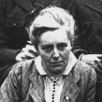 Madeleine ffrench Mullen1880–1944Ireland
Madeleine ffrench-Mullen (30 December 1880 â 26 May 1944) was an Irish revolutionary and labour activist who took part in the Easter Rising in Dublin in 1916. Ffrench-Mullen was a member of the radical nationalist women's organisation Inghinidhe na hÃireann.
 Maire Comerford1893–1982Ireland
Mary Eva Comerford (2 June 1893 â 15 December 1982) was an Irish republican from County Wexford.
- May Gibney1893–1984Ireland
May Bridget Gibney (2 October 1893 â 1984) was an Irish nationalist and republican, active during the Easter Rising of 1916 and both the War of Independence and the Irish Civil War.
_for_Allen_&_Ginter_Cigarettes_MET_DP835044.jpg) Walter Kennedy1695–1721Ireland
Walter Kennedy1695–1721IrelandWalter Kennedy (c.â1695 â 21 July 1721) was an English pirate who served as a crew member under Howell Davis and Bartholomew Roberts.
- Benjamin Lett1813–1858Ireland