All persons
Felix Dzerzhinsky
1877–1926
- Nationality
- Russian Empire
- Occupation
- politician
Felix Edmundovich Dzerzhinsky (11 September [O.S.
Incarceration history
Facilities
- Oryol PrisonDates unknown
- Butyrka prisonDates unknown
Biography
Felix Edmundovich Dzerzhinsky (11 September [O.S. 30 August] 1877 â 20 July 1926), nicknamed Iron Felix (Russian: ÐелезнÑй ФеликÑ), was a Bolshevik revolutionary and politician of Polish origin. From 1917 until his death in 1926, he led the first three Soviet secret police organizationsâthe Cheka, the GPU and the OGPUâestablishing state security organs for the new Soviet government. Born to a Polish family of noble descent in Ozhyemblovo estate (now Dzerzhinovo), in Russian Poland, Dzerzhinsky embraced revolutionary politics from a young age, and was active in the Social Democracy of the Kingdom of Poland and Lithuania party. Active in Kaunas and Warsaw, he was frequently arrested and underwent several exiles to Siberia, from which he escaped every time. He evaded the tsarist secret police, the Okhrana, whose work he took interest in. Dzerzhinsky participated in the failed 1905 Revolution, and pursued further revolutionary activities in Germany and Poland. after a final arrest in 1912, was imprisoned until the February Revolution of 1917. He then joined Vladimir Lenin's Bolshevik party, and played an active role in the October Revolution which brought them to power. In December 1917, Lenin named Dzerzhinsky head of the newly established the All-Russian Extraordinary Commission (Cheka), tasking him with the suppression of counter-revolutionary activities in Soviet Russia. The Russian Civil War saw a vast expansion of the Cheka's authority, inaugurating a campaign of mass arrests, detentions and executions in what became known as the Red Terror. The agency was reorganized as the State Political Directorate (GPU) in 1922, and then as the Joint State Political Directorate (OGPU) a year later, with Dzerzhinsky remaining as head of the powerful organization. He served as director of the Supreme Soviet of the National Economy (VSNKh) from 1924. Dzerzhinsky died of a heart attack in 1926, and was buried in the Kremlin Wall Necropolis. He was remembered by secret police agents (known as "Chekists" throughout the Soviet era) as a hero of the revolution. A large statue of him stood in front of the security service headquarters at Moscow's Lubyanka Building until 1991. He also became a prominent symbol of repression and brutality to critics of the Soviet government.
Related people
Same nationality and era where possible; falls back to shared nationality or era.
- UladzislaÅ PaÅliukoÅski1895–1955Russian Empire
 Vladimir Kotulsky1879–1951Russian Empire
 Konstantin Rokossovsky1896–1968Russian Empire
Konstantin Konstantinovich Rokossovsky (9 December [O.S.
 Aron Baron1891–1937Russian Empire
Aron Davydovych Baron (Ukrainian: ÐÑоÌн ÐавиÌÐ´Ð¾Ð²Ð¸Ñ ÐаÌÑон; 1891â1937) was a Ukrainian Jewish anarchist revolutionary.
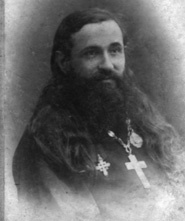 Alexander Glagolev1872–1937Russian Empire
Alexander Alexandrovich Glagolev (Ukrainian: ÐлекÑÐ°Ð½Ð´Ñ ÐлекÑандÑÐ¾Ð²Ð¸Ñ ÐлаголÑв, Russian: ÐлекÑаÌÐ½Ð´Ñ ÐлекÑаÌндÑÐ¾Ð²Ð¸Ñ ÐлагоÌлев; 14 February 1872 â 25 November 1937) was a Russian Orthodox priest and religious philosopher as well as professor of the Kiev Theological Seminary.
- Julius Jacob Hammer1874–1948Russian Empire