All persons
Constance Bulwer-Lytton
1869–1923
- Nationality
- United Kingdom of Great Britain and Ireland
- Occupation
- writer
Lady Constance Georgina Bulwer-Lytton (12 February 1869 â 22 May 1923), usually known as Constance Lytton, was an influential British suffragette activist, writer, speaker and campaigner for prison reform, votes for women, and birth control.
Incarceration history
Facilities
- HM Prison HollowayDates unknown
- HMP LiverpoolDates unknown
Biography
Lady Constance Georgina Bulwer-Lytton (12 February 1869 â 22 May 1923), usually known as Constance Lytton, was an influential British suffragette activist, writer, speaker and campaigner for prison reform, votes for women, and birth control. She used the name Jane Warton to avoid receiving special treatment when imprisoned for suffragist protests. Although born and raised in the privileged ruling class of British society, Lytton rejected this background to join the Women's Social and Political Union (WSPU), the most militant group of suffragette activists campaigning for "Votes for Women". She was subsequently imprisoned four times, including once in Walton gaol in Liverpool under the nom de guerre of Jane Warton, where she was force fed while on hunger strike. She chose the alias and disguise of Jane Warton, an "ugly London seamstress", to avoid receiving special treatment and privileges because of her family connections: she was the daughter of a viceroy and the sister of a member of the House of Lords. She wrote pamphlets on women's rights, articles in The Times newspaper, and a book on her experiences, Prisons and Prisoners, which was published in 1914. While imprisoned in Holloway during March 1909, Lytton used a piece of broken enamel from a hairpin to cut the letter "V" into the flesh of her breast, placed exactly over the heart. (The "V" came from "Votes for Women", as she had planned to scratch the whole phrase "beginning over the heart and ending it on [her] face".) Lytton remained unmarried, because her mother refused her permission to marry a man from a "lower social order", while she refused to contemplate marrying anyone else. Her heart attack, stroke, and early death at the age of 54 have been attributed in part to the trauma of her hunger strike and force feeding by the prison authorities.
Related people
Same nationality and era where possible; falls back to shared nationality or era.
 Annot Robinson1874–1925United Kingdom of Great Britain and Ireland
Annot Robinson, nicknamed Annie, (née Wilkie; 8 June 1874 â 29 September 1925) was a Scottish suffragette and pacifist.
 Oscar Wilde1854–1900United Kingdom of Great Britain and Ireland
Oscar Fingal O'Fflahertie Wills Wilde (16 October 1854 â 30 November 1900) was an Irish author, poet and playwright.
 John Maclean1879–1923United Kingdom of Great Britain and Ireland
John Maclean (24 August 1879 â 30 November 1923) was a Scottish schoolteacher and revolutionary socialist of the Red Clydeside era.
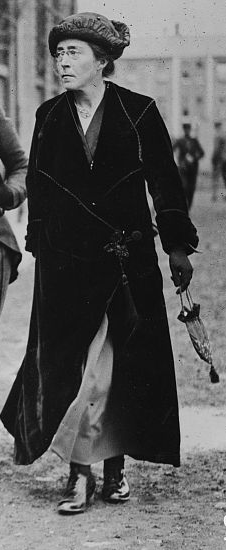 Hanna Sheehy-Skeffington1877–1946United Kingdom of Great Britain and Ireland
Johanna Mary Sheehy-Skeffington (née Sheehy; 24 May 1877 â 20 April 1946) was a suffragette and Irish nationalist.
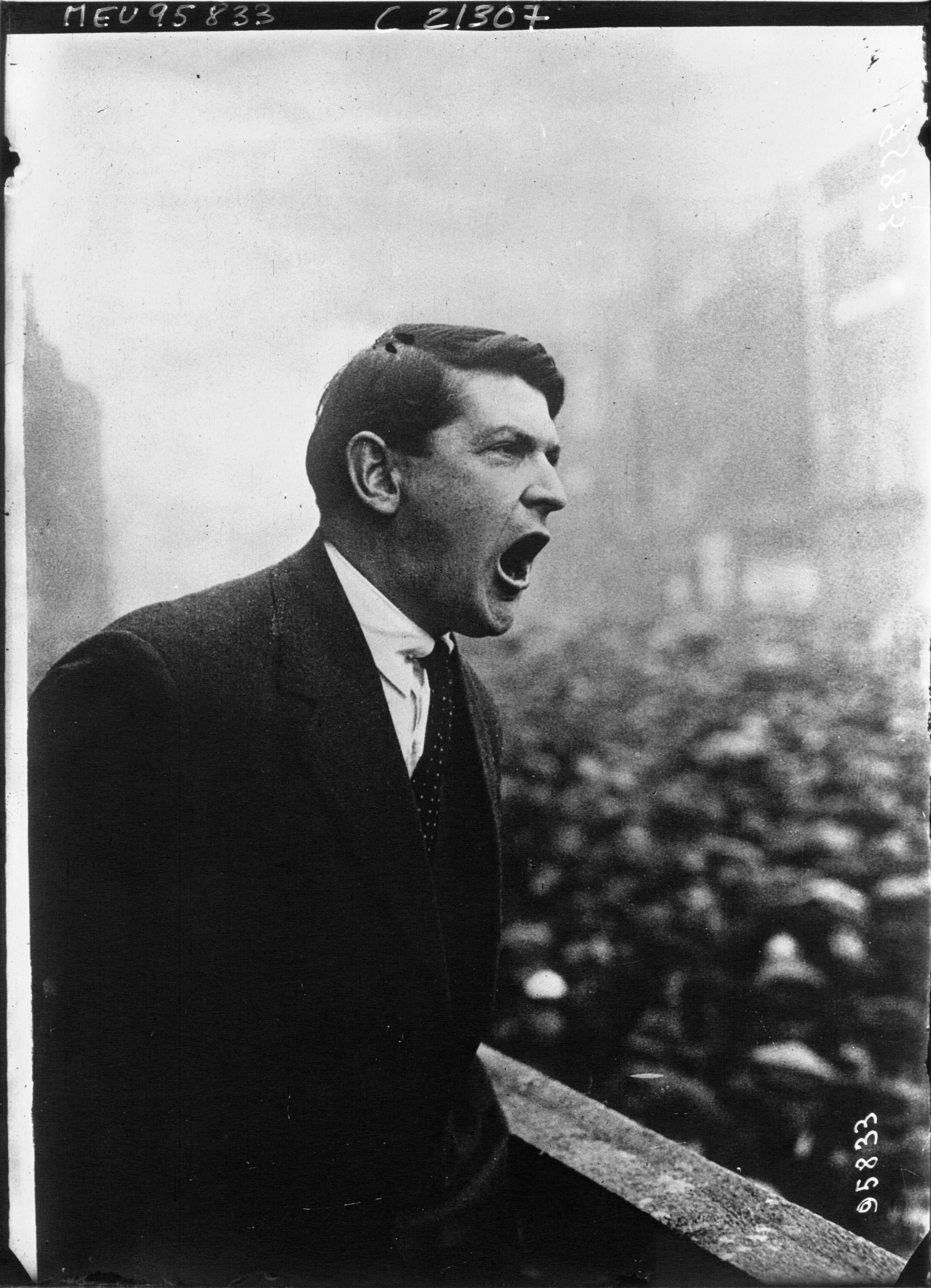 Michael Collins1890–1922United Kingdom of Great Britain and Ireland
Michael Collins (Irish: MÃcheál à Coileáin; 16 October 1890 â 22 August 1922) was an Irish revolutionary, soldier and politician who was a leading figure in the early-20th century struggle for Irish independence.
.jpg) Emmeline Pankhurst1858–1928United Kingdom of Great Britain and Ireland
Emmeline Pankhurst1858–1928United Kingdom of Great Britain and IrelandEmmeline Pankhurst (; née Goulden; 15 July 1858 â 14 June 1928) was a British political activist who organised the British suffragette movement and helped women to win the right to vote in Great Britain and Ireland in 1918.