All persons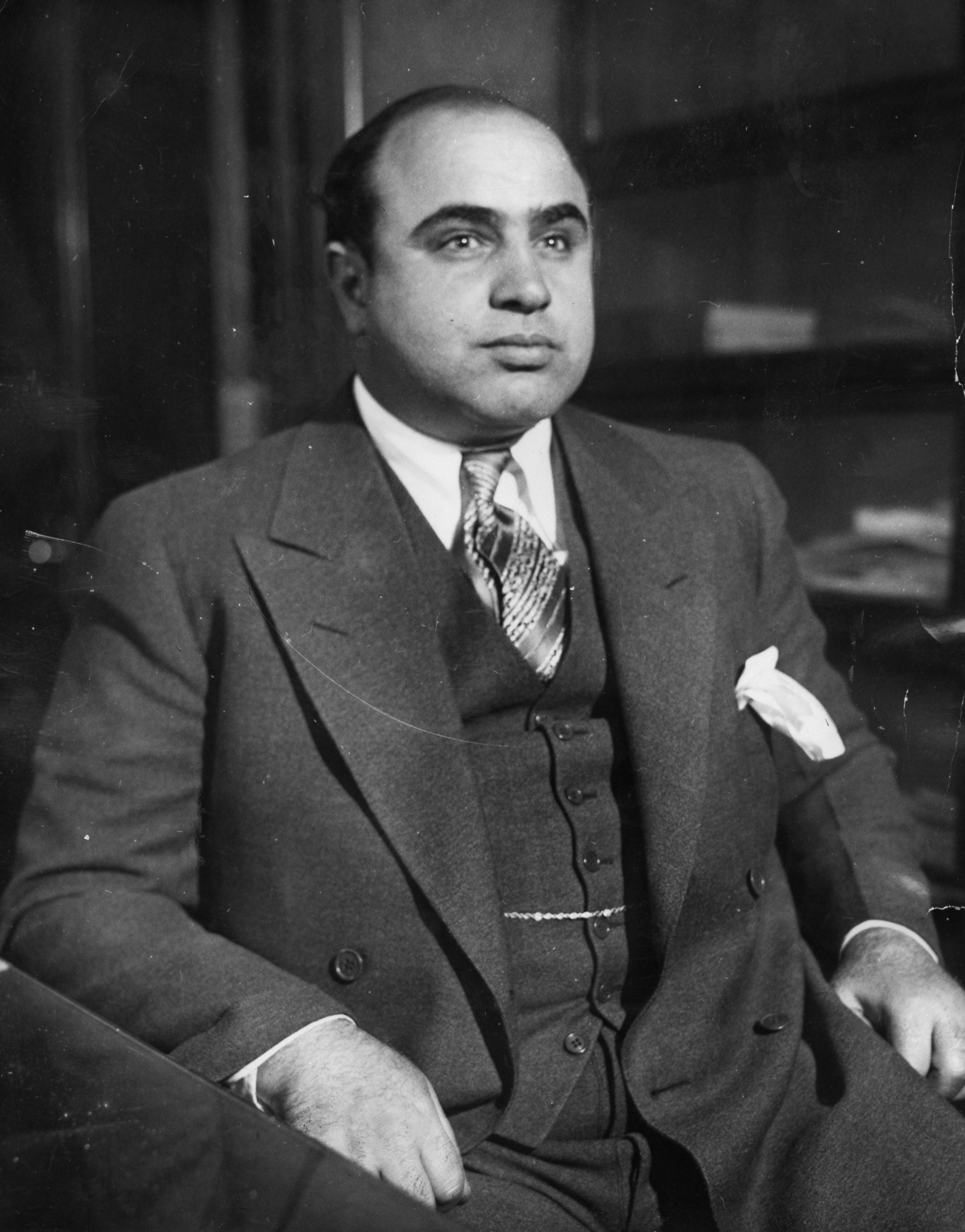
Al Capone
1899–1947
- Nationality
- United States
- Occupation
- gangster
Alphonse Gabriel Capone (, kÉ-POHN; Italian: [kaËpoËne]; January 17, 1899 â January 25, 1947), sometimes known by the nickname "Scarface", was an American gangster and businessman who attained notoriety during the Prohibition era as the co-founder and boss of the Chicago Outfit from 1925 to 1931.
Incarceration history
Facilities
- Alcatraz Federal PenitentiaryDates unknown
- Fci Terminal IslandDates unknown
Biography
Alphonse Gabriel Capone (, kÉ-POHN; Italian: [kaËpoËne]; January 17, 1899 â January 25, 1947), sometimes known by the nickname "Scarface", was an American gangster and businessman who attained notoriety during the Prohibition era as the co-founder and boss of the Chicago Outfit from 1925 to 1931. His seven-year reign as a crime boss ended when he was imprisoned at the age of 33. Capone was born in New York City in 1899 to Italian immigrants. He joined the Five Points Gang as a teenager and became a bouncer in organized crime premises such as brothels. In his early twenties, Capone moved to Chicago and became a bodyguard of Johnny Torrio, head of a criminal syndicate that illegally supplied alcoholâthe forerunner of the Outfitâand was politically protected through the Unione Siciliana. A conflict with the North Side Gang was instrumental in Capone's rise and fall. Torrio went into retirement after North Side gunmen almost killed him, handing control to Capone. Although Capone expanded the bootlegging business through increasingly violent means, his mutually profitable relationships with Mayor William Hale Thompson and the Chicago Police Department meant he seemed safe from law enforcement. Capone apparently reveled in attention, such as the cheers from spectators when he appeared at baseball games. He made donations to various charities and was viewed by many as a "modern-day Robin Hood". The Saint Valentine's Day Massacre, in which seven people from rival gangs were murdered in broad daylight, damaged the public image of Chicago and Capone, leading influential citizens to demand government action and newspapers to dub Capone "Public Enemy No. 1". Federal authorities became intent on jailing Capone and charged him with twenty-two counts of tax evasion. He was convicted of five counts in 1931. During a highly publicized case, the judge admitted as evidence Capone's admissions of his income and unpaid taxes, made during prior and ultimately abortive negotiations to pay the government taxes he owed. He was convicted and sentenced to eleven years in federal prison. After conviction, he replaced his defense team with experts in tax law, and his grounds for appeal were strengthened by a U.S. Supreme Court ruling, although his appeal ultimately failed. Capone showed signs of neurosyphilis early in his sentence and became increasingly debilitated before being released after almost eight years of incarceration. In 1947, he died of cardiac arrest after a stroke.
Related people
Same nationality and era where possible; falls back to shared nationality or era.
- Bruno Bettelheim1903–1990United States
Bruno Bettelheim (German: [ËbÉtlÌ©haɪm]; August 28, 1903 â March 13, 1990) was an Austrian-born American psychologist, scholar, public intellectual and writer who spent most of his academic and clinical career in the United States.
.png) Louise Peete1880–1947United States
Louise Peete1880–1947United StatesLouise Peete (September 20, 1880 â April 11, 1947) was a convicted American serial killer.
 Ralph Roe1906–1937United States
Theodore Cole (born April 6, 1912 â disappeared December 17, 1937) and Ralph Roe (born February 5, 1906 â disappeared December 17, 1937) were Oklahoma bank robbers who took part in the second escape attempt from Alcatraz in 1937.
- Mary Mon Toy1916–2009United States
Mary Mon Toy (June 3, 1916 â December 7, 2009) was a Japanese American actor, showgirl, and secretary.
 Arthur Barker1899–1939United States
Arthur Raymond "Doc" Barker (June 4, 1899 â January 13, 1939) was an American criminal, the son of Ma Barker and a member of the Barker-Karpis gang, founded by his brother Fred Barker and Alvin Karpis.
- Violet Kazue de Cristoforo1917–2007United States
Violet Kazue de Cristoforo (September 3, 1917 â October 3, 2007) was a Japanese American poet, composer and translator of haiku.